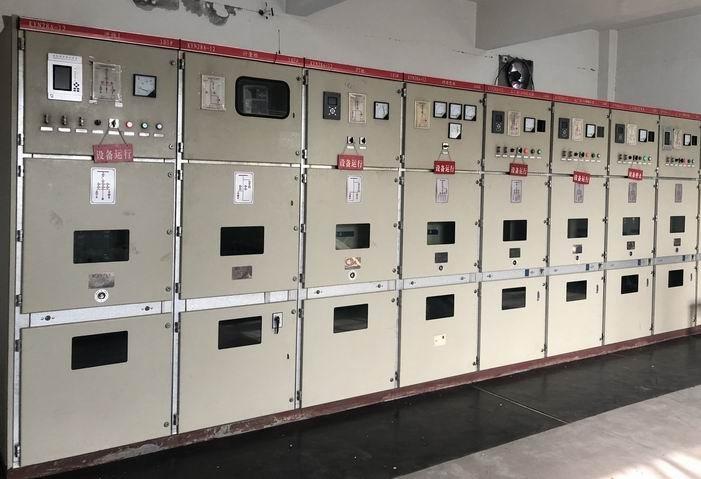
Start with the maintenance question
The medium-voltage switchgear range should be selected against an approved single-line diagram and an owner-defined maintenance philosophy. Ask which work the owner intends to perform, which parts would be isolated and which other parts are expected to remain available. The engineer can then specify the relevant classification and the information required to establish that the offered construction fits the requirement.
Write these as project cases, not as an instruction for operating the equipment. For example, a cable-compartment inspection and breaker withdrawal can involve different boundaries. The quotation should identify which case the declaration covers and the documents governing access. Never infer a permitted site procedure from a marketing description of compartmentalization.
Match declarations to the offered compartments
| Procurement subject | Decision from the project | Evidence from the supplier |
|---|---|---|
| Maintenance case | Work scope, isolated parts and expected service availability | Case-by-case response tied to the compartment drawing |
| LSC category | Required loss-of-service-continuity declaration | Exact offered category and applicable design evidence |
| Partition class | Contractual partition requirement | Declared class and construction details |
| Accessibility | Who may access which compartments under approved conditions | Access descriptions, restrictions and equipment instructions |
| Isolation and earthing | Project philosophy and responsibility for approval | Isolation-boundary diagrams and relevant interlock information |
| Construction identity | Offered panel variants and line-up arrangement | Drawing references linking the declaration to the quoted units |
| Acceptance | Documents, demonstrations and deviations required | Inspection plan and explicit exceptions |
The engineer should select the contractual terminology and standard edition. A supplier response should state the actual class rather than “equivalent” without an explained basis. Keep alternative constructions and any different maintenance implications visible in the commercial comparison.
Separate LSC, partitions and internal arc
The internal-arc procurement guide addresses a different declaration and its supporting evidence. A service-continuity category should not be presented as an internal-arc classification, or vice versa. Request the relevant statements separately, each matched to the offered equipment and installation requirements.
The metal-clad versus metal-enclosed comparison provides broader construction terminology. Use that terminology consistently, but avoid treating the product name as a substitute for an identified classification. A panel schedule may contain several functional units; confirm whether the declared construction and limitations apply to every quoted variant.
Coordinate handcart positions and access documents
A withdrawable unit needs defined equipment states and interfaces. The handcart-position RFQ guide addresses those deliverables. Connect the compartment and access descriptions to the same drawing revisions so terms such as disconnected, removed or accessible are not used differently across documents.
The interlocking cause-and-effect guide helps turn requirements into a reviewable schedule. Ask the supplier to explain the physical and control interfaces for the offered construction and identify any owner-supplied keys or signals. Do not add an unreviewed interlock bypass as a way to claim a maintenance case is supported. The approved operating and safety procedures remain the owner's responsibility.
Example: one tender phrase leaves two different offers
A tender requests “metal-clad withdrawable switchgear” and assumes that a particular cable-compartment maintenance case is possible. One offer describes that case and provides the applicable declaration; another gives only a breaker-type description. Resolve the missing access and service-continuity information before comparing the offers as equivalent. The required clarification concerns the complete construction and maintenance boundary, not just the breaker mechanism.
Before manufacturing release, retain the approved compartment drawings, classification statements, evidence references, access restrictions and deviation responses. At FAT, witness only the agreed demonstrations under the approved procedure. A mechanical demonstration should not be relabelled as a classification test that it did not perform.
RFQ checklist
- System voltage, fault duty, current, functional units and line-up diagram.
- Owner maintenance cases and expected isolation/service boundaries.
- Required LSC category, partition class and contractual edition.
- Offered compartment arrangement and panel-variant identification.
- Access restrictions, isolation/earthing descriptions and equipment instructions.
- Handcart, shutter, key and control-interlock interfaces where applicable.
- Classification evidence, applicability explanations and deviations.
- Factory demonstrations, document approval and site responsibilities.
- Final drawings, operating documents and future modification controls.
Use the MV switchgear product page or project enquiry page to send the maintenance-case schedule. Jinxing should confirm the actual offered classifications and evidence in writing.